
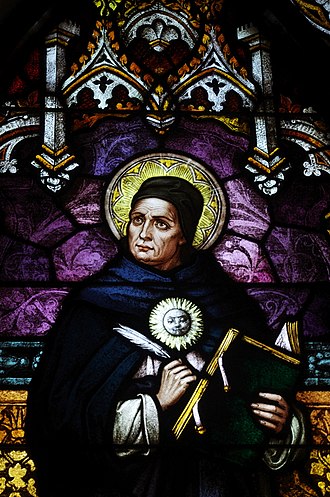
Do you know who this is?
This is St. Thomas Aquinas, a Doctor of the Church, best known for his Summa Theologica. “It is a compendium of all of the main theological teachings of the Catholic Church, intended to be an instructional guide for theology students, including seminarians and the literate laity.”
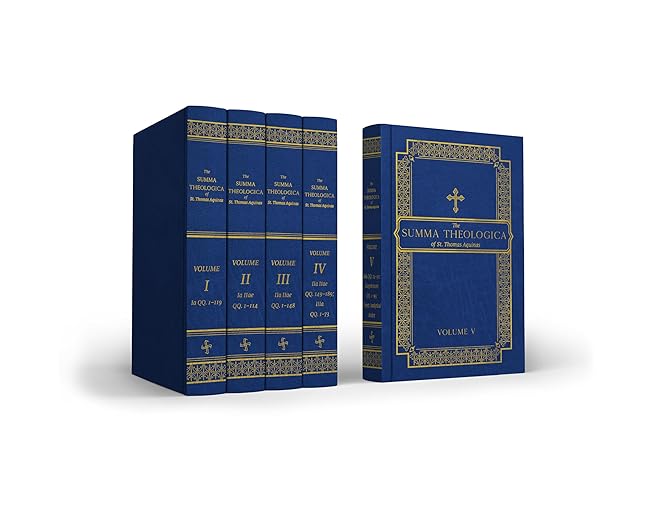
Available on Amazon for $196.43 in hardback and $131.10 in paperback.
What is the Summa Theologica anyway?
“It is “one of the classics of the history of philosophy and one of the most influential works of Western literature”. It remains Aquinas’s “most perfect work, the fruit of his mature years, in which the thought of his whole life is condensed”.
Throughout the Summa, Aquinas cites Christian, Muslim, Hebrew, and Pagan sources, including, but not limited to: Christian Sacred Scripture, Aristotle, Augustine of Hippo, Avicenna, Averroes, Al-Ghazali, Boethius, John of Damascus, Paul the Apostle, Pseudo-Dionysius, Maimonides, Anselm of Canterbury, Plato, Cicero, and John Scotus Eriugena.”
You may be wondering why I used the word morbid in the title of this blog. Well, it isn’t because students who are studying the Summa Theologica may feel it is a death sentence, which is a quite morbid thought.
The skull of St. Thomas Aquinas is traveling the East Coast of the United States:
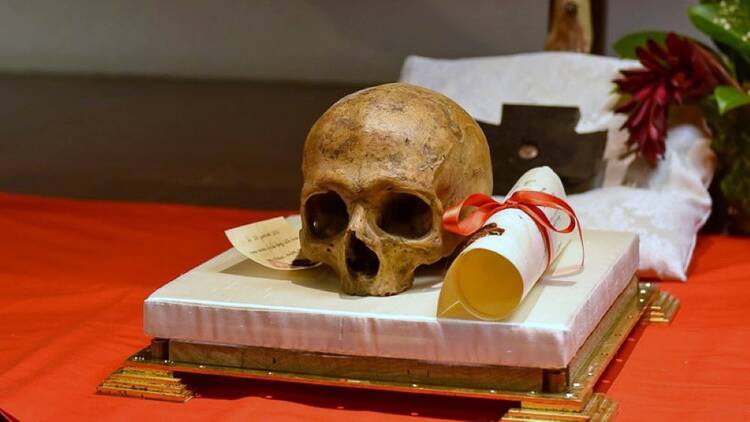
This first class relic will be coming to my area and I plan on going with a friend to go visit it, then go to Mass. It is especially important to me because I am starting graduate school to get my Master’s in Theology and St. Thomas Aquinas the patron saint of uiversities and students.
However, when I told other people about it, their responses were that it is morbid, sacrilegous, and one person even said they should just continue to let him rest in peace in Toulouse and send his shorts on tour instead.
The person who thought it was sacreligous thought St. Thomas would be appalled by it.
This is true, it is appalling and unnerving to see someone’s real skull and, quite frankly, I’m surprised the Vatican lets such a major relic go on tour.
According to the Jesuit magazine, America, “The skull of St. Thomas, which has been on tour in Europe for the past year for observances marking the jubilees of his canonization (700 years in 2023), death (750 years in 2024) and birth (800 years in 2025) will be in Washington for two days of veneration Nov. 29 and 30.”
So, St. Thomas Aquinas is very well traveled.
People will come to “venerate.” I had to look up what that suspicious word meant. It means “regard with great respect; revere.”
I’m not looking for veneration when I go visit this relic, I am going for inspiration. Because, as I said, one of his patronages is students and I am about to become one again at the same age he died, 49.
I don’t want to just try to get my Master’s in Theology I want to get my Master’s in Theology. I know I will have to study his works and he better whisper into my ear what the heck he meant, because I’ve heard he is very difficult to comprehend. And I have a reading comprehension problem to boot. Graduate school doesn’t come with a lot of reading does it?
Just in case anyone was wondering, Catholics do not worship Mary, nor do we worship saints. Mary plays a special role being the mother of Jesus, but she is not a god. We worship the Father, the Son, and the Holy Spirit, basically just great old God.
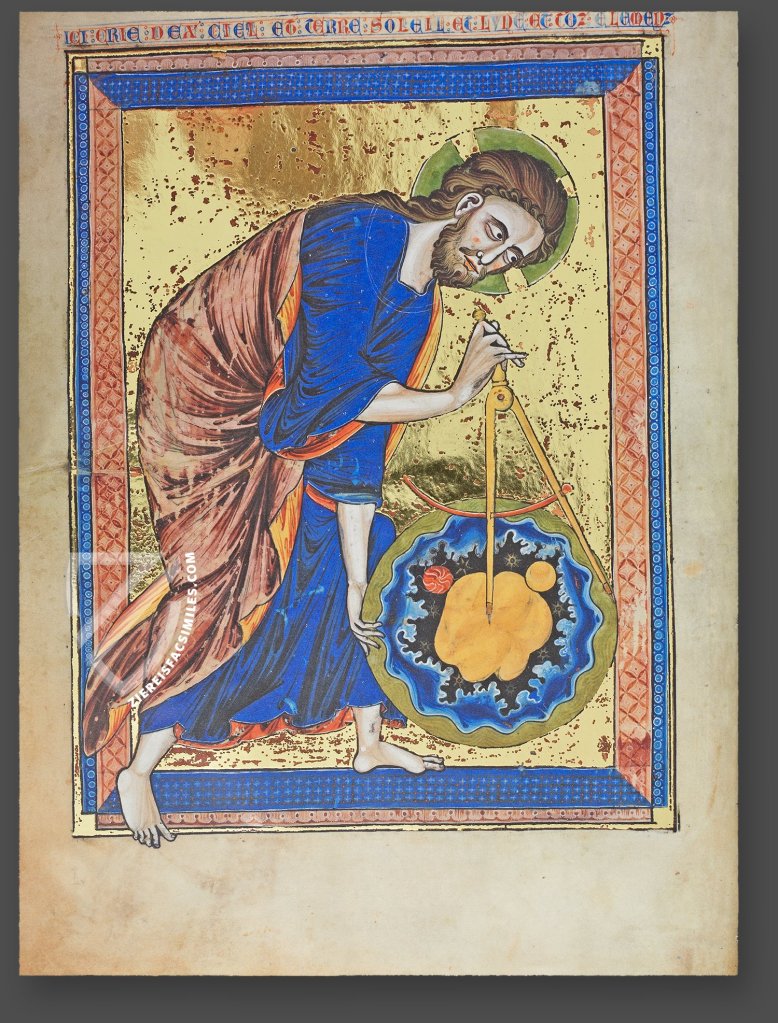
Here are two other saints, I will take inspiration from during graduate school:
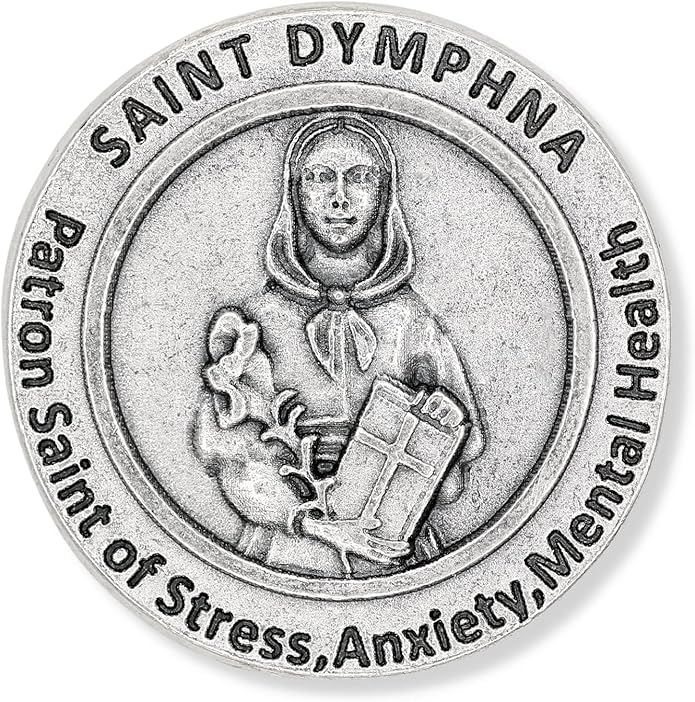
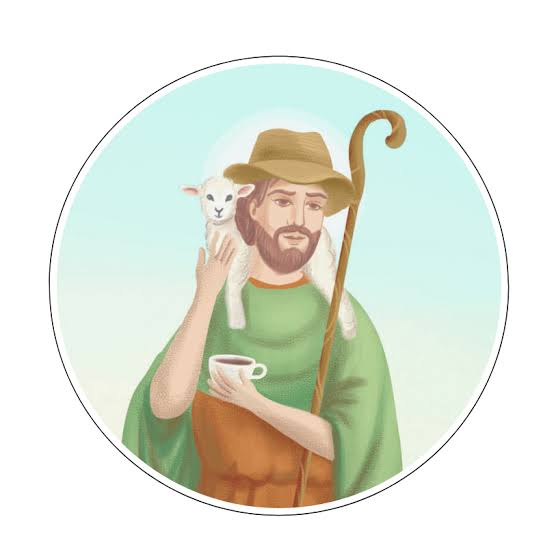
There is no way to survive without this unknown saint:
But, this is all just me, it might not be you. You may find your inspiration in the rain or a field of flowers or writing an actual letter with pen and paper and stamp. Whatever your inspiration is, find it, and use it, that is how we stimulate our creative selves.
SOURCES:
https://en.wikipedia.org/wiki/Thomas_Aquinas
https://en.wikipedia.org/wiki/Summa_Theologica
Miriam Kavanagh


Leave a Reply