

In case you know me or possibly have discovered from this blog or my other blog, When in Juarez about the time I was in the convent and spent all of Advent 2012 working at the mission in Juarez for special needs youths and adults (I don’t speak Spanish.), I am Catholic.

One of the youths at El Manantial who speaks better English than I do Spanish, and who gives me a blessing at the end of the day said, “I love you.” I said, “I love you too.” She said, “No, I love you for you.” -from When in Juarez

However, just because I am Catholic and headed for graduate school to get my Master’s Degree in Theology at Holy Apostles College and Seminary in January (please pray for me or just send out good vibes, if that’s your thing), it doesn’t mean I don’t believe religions or agnostics or atheists are not all equal.
It’s important to remember as you read this that all of these religions or non-religions are persecuted in some way. It doesn’t matter who is persecuted the most. If just one person in this group is persecuted, the entire group has been persecuted. No one should put up with prejudice against hate for their beliefs in anything. Stand up for what you believe in!
All religions are a path to reach God. They are – I make a comparison – like different languages, different idioms, to get there.
Pope Francis
First, you should know there are just over 8 billion people on the planet, that may give you a better idea of the breakdown of numbers. I am only going to go over the top five, but I will give you a list of 18 world religions from Britannica as of 2020, as well as the number of people who practice them, which also contains the names and numbers for different sects that will not be discussed here. If you want to learn more about the religions or the different groups within the religions follow the link within each of the religions. I have found Wikipedia to be a great resource, especially the links at the end.
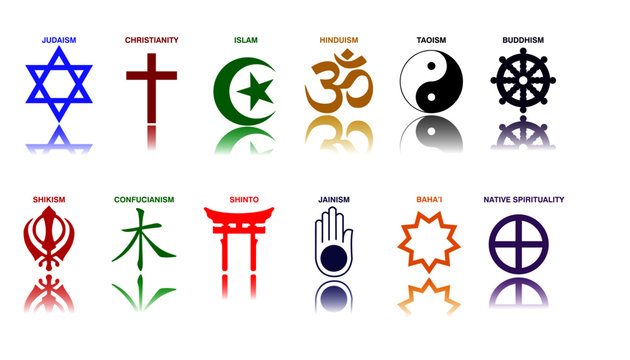
The first three religions are Abrahamic religions and you may be wondering what that means. “It refers to Abraham, a figure mentioned in the Hebrew Bible, the Christian Bible, and the Quran respectively, and is used to show similarities between these religions and put them in contrast to Indian religions, Iranian religions, and the East Asian religions (though other religions and belief systems may refer to Abraham as well). Furthermore, some religions categorized as “Abrahamic” also share elements from other categories, such as Indian religions, or for example, Islam with Eastern religions.” Source: Wikipedia
Wait…wait…wait…
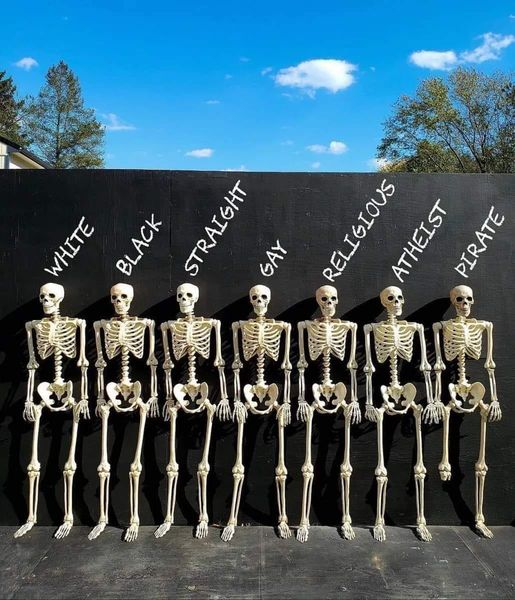
The point of all this is to become educated about different belief systems. There is more to a person’s belief than meets the eye. No one knows what goes on in our heads or hearts. Even if you have feet firmly planted in your belief system, whether it be Atheism or Zoroastrianism, we all share the same thing. I won’t be overly dramatic and say the human condition, I’ll just let Bansky paint the picture for me.
If I have left out a religion that you feel should be on this blog, email me (miriam5@ymail.com) or use the Keep in Touch link on the front page, and I will gladly do some updating!
Christianity

“Christianity is an Abrahamic monotheistic religion, professing that Jesus Christ was raised from the dead and is the Son of God, whose coming as the Messiah was prophesied in the Hebrew Bible (called the Old Testament in Christianity) and chronicled in the New Testament.”
Christianity stands at the worlds largest religion at about 2.4 billion in 157 countries and terrioties worldwide. The holy book of Christianity is the Bible.
“The oldest and most important Christian holiday is Easter, a spring holiday that celebrates Jesus Christ‘s resurrection from the dead.” While not as important as Easter, but is still a major holiday is Christmas. Because of its popularity, Christmas is celebrated by many people who aren’t Christian. Christmas, to put very simply, is a “Christian festival celebrating the birth of Jesus.”
Sources: Wikipedia, Christian Holidays, Pew Research Center, Britannica
Islam

“Islam is an Abrahamic monotheistic religion centered on the Quran and the teachings of Muhammad, the religion’s founder. Adherents of Islam are called Muslims. … Muslims believe that Islam is the complete and universal version of a primordial faith that was revealed many times through earlier prophets and messengers, including Adam, Noah, Abraham, Moses, and Jesus.
Islam is the world’s second largest religion with 1.9 billion people in about 50 countries. The holy book of Islam is the Quran.
There are two main celebrations in Islam Eid al-Fatr, “marks the end of the month-long dawn-to-dusk fasting of Ramadan.” The other is Eid al-Adha, which “honours the willingness of Abraham to sacrifice his son as an act of obedience to God‘s command.”
Sources: Wikepedia, Muslim Majority Countries 2024
Judaism

“Judaism is an Abrahamic monotheistic ethnic religion that comprises the collective spiritual, cultural, and legal traditions of the Jewish people. Religious Jews regard Judaism as their means of observing the Mosaic covenant, which was established between God and the Israelites, their ancestors.The religion is considered one of the earliest monotheistic religions in the world.” [N.B., Mosaic means Moses.]
Judaism has about 16.8 million followers in the world, and is the 12th most followed religion. The holy book of Judaism is the Torah.
Judaism’s most important holiday celebrations are named the High Holy Days and they are comprised of Rosh Hashanah and Yom Kippur. Rosh Hashanah is “both the celebration of the Creation of the world and the new year as well as the Day of Judgement. This holiday lasts two days. Yom Kippur is “a fast day that is traditionally filled with prayer and collective confession and atonement. It is said that ‘on Rosh Hashanah the Book of Life is written and on Yom Kippur it is sealed.’”
Sources: 18Doors, Jewish Virtual Library, Britannica, Wikipedia
Hinduism
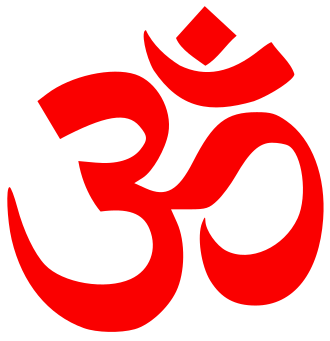
Before I begin, it will help to know what dharma means. Dharma “is understood to refer to behaviours which are in harmony with the ‘order and custom’ that sustains life; ‘virtue’, or ‘religious and moral duties.’”
“Hinduism is an umbrella-term for a broad range of Indian religious and spiritual traditions (sampradayas) that are unified by the concept of dharma (‘Hindu dharma’), a universal order maintained by its followers through rituals and righteous living. The word Hindu is an exonym [a place name that’s used by people who don’t live there or speak the native language], and while Hinduism has been called the oldest religion in the world, it has also been described as Sanātana Dharma (lit. ’eternal dharma’), a modern usage, based on the belief that its origins lie beyond human history, as revealed in the Hindu texts Another endonym [a place name that’s used by the people who actually live there] for Hinduism is Vaidika Dharma (lit. ’Vedic dharma’).”
There are 1.1 billion people who practice Hinduism, this makes it the third most celebrated religion. For the most part Hinduism is primarily practiced in three countries, India, Nepal, and Bangladesh. “Hinduism’s holy books are called The Vedas, and there are four primary books: Rig Veda, Sama Veda, Yajur Veda, and Atharva Veda. They are believed to have always existed, passed down orally until they were written in Sanskrit during 1500-500 B.C.E., which is known as the Vedic Period, by Vyasa Krishna Dwaipayana.”
Diwali is the most important celebration for Hindus; “it symbolises the spiritual victory of Dharma over Adharma, light over darkness, good over evil, and knowledge over ignorance.”
There is a more extensive blog post on this beautiful five-day festival called Happy Diwali!
Buddhism

“Buddhism also known as Buddha Dharma, is an Indian religion and philosophical tradition based on teachings attributed to the Buddha, a wandering teacher who lived in the 6th or 5th century BCE. … According to tradition, the Buddha taught that dukkha (lit. ’suffering or unease’) arises alongside attachment or clinging, but that there is a path of development which leads to awakening and full liberation from dukkha. This path employs meditation practices and ethical precepts rooted in non-harming, with the Buddha regarding it as the Middle Way between extremes such as asceticism or sensual indulgence. Widely observed teachings include the Four Noble Truths, the Eightfold Noble Path, and the doctrines of dependent origination, karma, and the three marks of existence. Other commonly observed elements include the Triple Gem, the taking of monastic vows, and the cultivation of perfections (pāramitā).”
Buddhism is the world’s fifth largest religion with over 530 million followers. There are three main branches of Buddhism, and they are celebrated in many countries. “Mahayana Buddhism is widely believed to be the largest, because it is prevalent in several countries with very large Buddhist populations, particularly China, Japan, South Korea and Vietnam. Theravada Buddhism, the second-largest branch, is concentrated in such countries as Thailand, Burma (Myanmar), Sri Lanka, Laos and Cambodia. Vajrayana Buddhism, the smallest of the three major branches, is concentrated in Tibet, Nepal, Bhutan and Mongolia.” Buddhism does not have one singluar holy text. “Instead, there are three main Buddhist Canons: the Pāli Canon of the Theravāda tradition, the Chinese Buddhist Canon used in East Asian Buddhist tradition, and the Tibetan Buddhist Canon used in Indo-Tibetan Buddhism.
“It’s debatable in what sect of Buddhism which of the holidays is most important, but Vesak seems to be one of the most, if not the most, important celebration. ‘The festival commemorates the birth, enlightenment (Nibbāna), and death (Parinirvāna) of Gautama Buddha in Theravada, Tibetan Buddhism, and Navayana.’”
Sources: Wikipedia, Pew Research Center
I said I was going to stop at five…well, that turned out not to be entirely true. I am going to combine the sixth with the seventh.
Atheism and Agnosticism
It is not necessary to believe in God to be a good person. In a way, the traditional notion of God is outdated. One can be spiritual but not religious. It is not necessary to go to church … for many, nature can be a church. Some of the best people in history did not believe in God, while some of the worst deeds were done in his name.
Pope Francis
“Atheism, in the broadest sense, is an absence of belief in the existence of deities. Less broadly, atheism is a rejection of the belief that any deities exist. In an even narrower sense, atheism is specifically the position that there are no deities. Atheism is contrasted with theism, which in its most general form is the belief that at least one deity exists.“
God is an imaginary psychiatrist.
(name protected due to age)
There are 147 million Atheists making it the eighth most popular belief system. I don’t think I have to do research to safely say that there are Atheists in every country; however, there are some countries which have a very high percentage of Atheists, like China, Sweden, the Czech Republic, the United Kingdom. The United States does not fall within the top ten Atheistic countries.
From within my own experience, I have known of some Atheists who seem angry, I know one who still has spirituality in her life she just doesn’t believe in God, I know someone who just flat out doesn’t believe in God or spirituality. I cannot speak for the angry ones because I do not know any of them. As for the others, I know they are incredible human beings with big hearts.
Even though Atheists may not believe in God, many still celebrate Christmas or a version of it. In a CNN article, Hemant Mehta said, “Christians don’t own December. Even if Christmas as a Christian holiday didn’t exist right now, I think there would be plenty of reason that it makes sense to take a couple weeks off at the end of the year, when the weather isn’t great, when everyone kind of needs a break from work,” said Mehta, a Chicago-area writer and former math teacher who blogs at The Friendly Atheist. “This is a nice way to just relax and spend time with your family. If it coincides with the majority’s religious holiday, great.”

Sources: Wikipedia, Britannica, University Magazine, CNN
“Agnosticism is the view or belief that the existence of God, the divine, or the supernatural is either unknowable in principle or unknown in fact. It can also mean an apathy towards such religious belief and refer to personal limitations rather than a worldview. Another definition is the view that ‘human reason is incapable of providing sufficient rational grounds to justify either the belief that God exists or the belief that God does not exist.’”
There are 744 million Agnostics, which is the fourth most practiced belief sytsem. I think it’s safe to say that there are Agnostics in every country; unfortunately, I have not been able to find the statistics because they are paired with Atheism.
The following are core principles we agree with:
- Be open-minded and be willing to alter your beliefs with new evidence.
- Strive to understand what is most likely to be true, not to believe what you wish to be true.
- The scientific method is the most reliable way of understanding the natural world.
- Every person has the right to control of their body.
- A god is not necessary to be a good person or to live a full and meaningful life.
- Be mindful of the consequences of all your actions and recognize that you must take responsibility for them.
- Treat others as you would want them to treat you, and can reasonably expect them to want to be treated. Think about their perspective.
- We have the responsibility to consider others, including future generations.
- There is no one right way to live.
- Leave the world a better place than you found it.
* These guidelines can be found in the book ‘Atheist Mind, Humanist Heart‘ by Lex Bayer and John Figdor
Sources: Wikipedia, Britannica, Agnostic.com
For a cool interactive map of world religions by country, vist: World Religions Map.
Populations of World Religions in 2020
1.Christianity: 2,521,460,000
2.Islam: 1,899,103,000
3.Hinduism: 1,090,592,000
4.agnosticism: 744,166,000
5.Buddhism: 530,612,000
6.Chinese folk religions: 457,672,000
7.ethnic or tribal religions (mostly in Africa): 288,022,000
8.atheist: 147,009,000
9.New Religionists (new religious movements in Asia): 67,463,000
10.Sikhism: 29,254,000
11.Spiritism and spiritualism: 14,805,000
12.Judaism: 14,800,000
13.Bahāʾī: 9,150,000
14.Daoism: 8,767,000
15.Confucianism: 8,755,000
16.Jainism: 6,344,000
17.Shintō: 2,773,000
18.Zoroastrianism: 205,000
Source: Britannica


Miriam Kavanagh
 Coffee & Writing
Leave a comment